What to Look For First
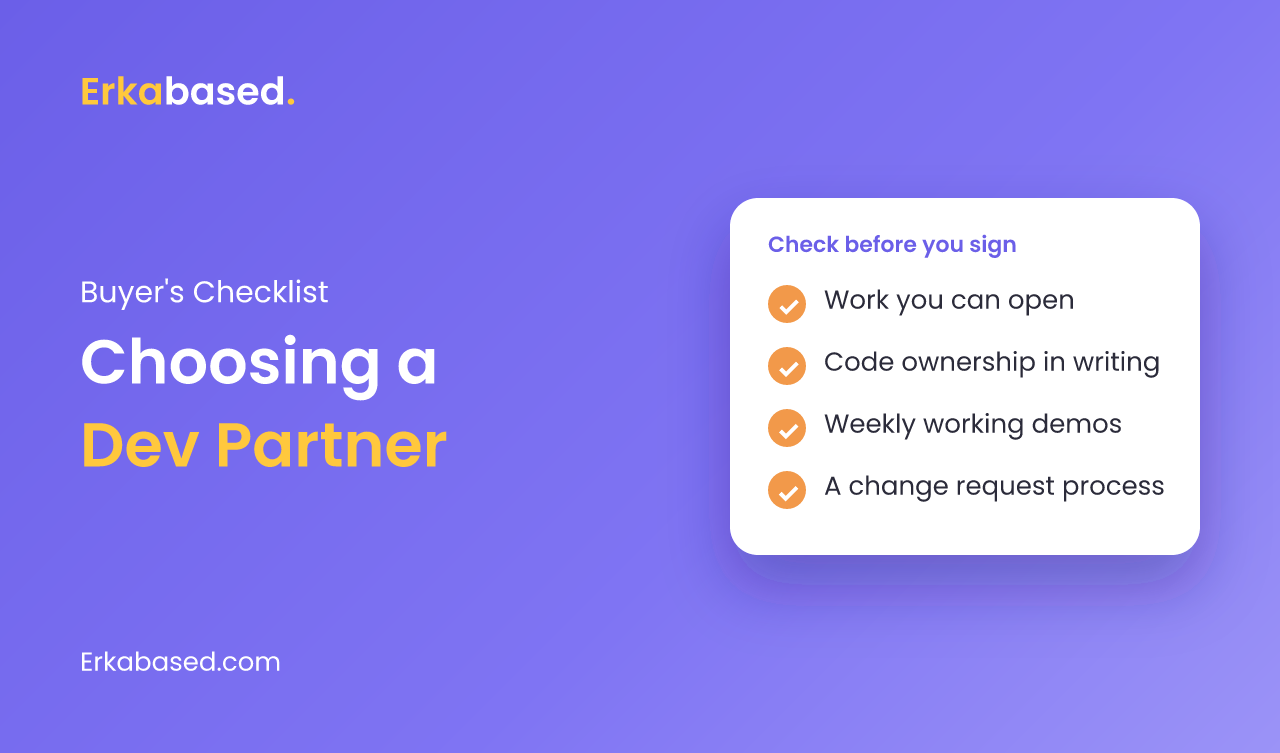
Choose a software development company on evidence, ownership, and process, not on the lowest quote. You want work you can open and use, a contract that gives you the code and accounts, and a delivery rhythm that shows you working software every week. Price matters, but it only means something once these three are in place.
This guide lists the questions to ask, the red flags that show up in proposals, the contract clauses that protect you, and a simple way to handle scope creep. It applies whether your partner is down the road or on the other side of the world.
Questions to Ask Every Candidate
| Question | A good answer sounds like | A weak answer sounds like |
|---|---|---|
| Can we see work that is live? | Links, screenshots, or a demo account you can try | Logos only, or everything is under NDA |
| Who will actually build this? | Named people you can meet before signing | The team will be assigned later |
| How often will we see progress? | A working demo every week or two | At the end of each phase |
| How do you test? | Automated tests, a staging environment, a release checklist | Our developers test their own work |
| What happens after launch? | A warranty period, then an optional maintenance plan | Vague, or everything is billed hourly |
| Who owns the code and accounts? | You do, from day one | We host it for you |
If a candidate answers the testing question poorly, read our explainer on automated versus manual testing to understand what you are missing.
Red Flags in a Proposal
- A fixed price without a written scope. Either the scope will be interpreted narrowly later, or the price will change.
- No discovery step. A partner who quotes a complex system after one call is guessing.
- Everything is possible, nothing is a trade-off. Good partners tell you what to cut and why.
- Payment weighted heavily up front, with little tied to delivered milestones.
- Proprietary platforms or frameworks that only this vendor can maintain.
- Hosting, domains, or repositories in the vendor's name, with no plan to transfer them.
- A quote far below the others with no explanation. Our guide to custom web app development cost explains why quotes differ and how to read a cheap one.
Code Ownership Is Not Automatic
Many buyers assume that paying for software means owning it. The law often says otherwise, which is why the contract must say it explicitly.
In the United States
The U.S. Copyright Office explains that "ordinarily, the author is the person or persons who actually created the work". A commissioned work only counts as a work made for hire if it falls within one of nine listed categories and both parties sign a written agreement saying so. Custom software built by an outside company usually needs a written assignment of copyright instead.
In Indonesia
Article 36 of Indonesia's Copyright Law, Law No. 28 of 2014, says that unless otherwise agreed, the creator and copyright holder of a work made in an employment relationship or on commission is the party that made it. The same law lists computer programs as protected works. If you hire an Indonesian partner, the contract should state that the copyright transfers to you.
Contract Clauses to Insist On
- Scope document attached to the contract, listing features and what is explicitly out of scope.
- Milestones and acceptance criteria that describe how each deliverable is approved.
- Payment schedule tied to accepted milestones.
- Copyright assignment of all code, designs, and documentation on payment.
- Handover package: source code, documentation, credentials, and deployment instructions.
- Change request process: how new requests are estimated, approved, and priced.
- Warranty period after launch, with what counts as a defect.
- Termination terms: what you receive if the project stops early.
How to Keep Scope Creep Under Control
Scope creep is common, not a sign of a bad client. In the PMI Pulse of the Profession 2021, respondents estimated that 34% of projects completed in the previous 12 months experienced scope creep.
The goal is not to stop change. Changing your mind after seeing a working demo is healthy. The goal is to make every change visible, estimated, and approved before it is built.
- Keep one written backlog that both sides can see.
- Estimate every new request in time and cost before approving it.
- Trade, don't add. When something new goes in, decide what moves out or later.
- Review the scope at every demo, not only at the end.
A clear process for each stage, from requirements to release, makes this far easier. We describe one in all about the software development life cycle.
Run a Paid Trial Before Committing
The most reliable test of a partner is a short paid engagement: a one to two week discovery or a first milestone. You get a written scope and a first piece of working software, and you learn how the team communicates under real conditions. If it goes badly, you have lost two weeks instead of six months.
Conclusion
The right software development company shows you real work, puts ownership in writing, and demonstrates progress every week. Ask the same questions of every candidate, read proposals for the red flags above, and insist on a change request process before any code is written. Choose the technology stack together with your partner, and base the final decision on evidence you can open, not on promises.
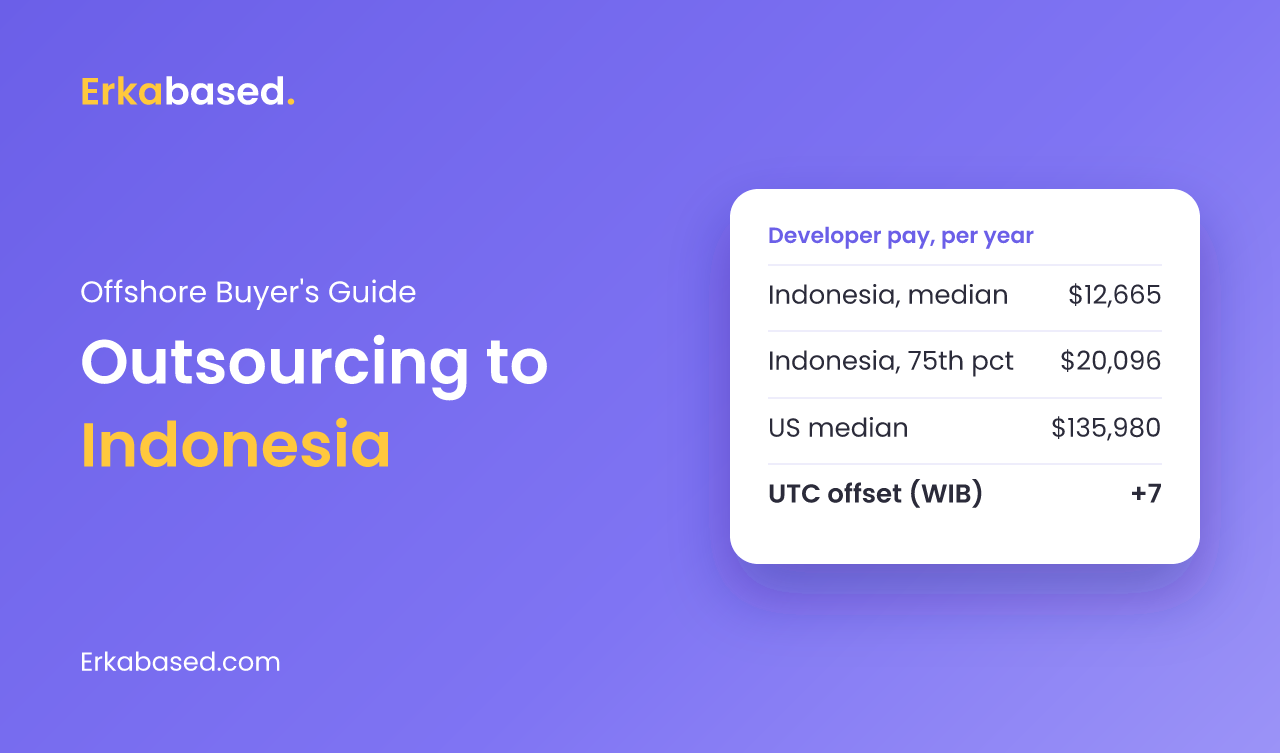
Read next: if you are considering a partner abroad, see outsourcing software development to Indonesia. If you are building a new product, start with how to scope an MVP.
Sources
- Pulse of the Profession 2021: Beyond Agility — Project Management Institute, 2021
- Circular 30: Works Made for Hire — U.S. Copyright Office, checked 19 September 2026
- Undang-Undang Nomor 28 Tahun 2014 tentang Hak Cipta — BPK RI (Indonesian Audit Board legal database), 16 October 2014
Frequently Asked Questions
How do I choose a software development company?
Choose a software development company based on live work you can open, named people you can meet, weekly working demos, and a contract that gives you the code and accounts. Ask every candidate the same questions so their answers are comparable, and start with a short paid trial.
Who owns the code when I hire a software development company?
Not automatically you. The U.S. Copyright Office notes that the author is ordinarily the person who created the work, and Article 36 of Indonesia's Copyright Law gives copyright in commissioned work to its maker unless otherwise agreed. The contract should include an explicit copyright assignment to you.
What are red flags when hiring a software developer?
Common red flags include a fixed price without a written scope, no discovery step, heavy up-front payment, proprietary platforms only the vendor can maintain, and hosting or repositories registered in the vendor's name. A quote far below the others without an explanation is another warning sign.
How common is scope creep in software projects?
Scope creep is common. In PMI's Pulse of the Profession 2021, respondents estimated that 34% of projects completed in the previous 12 months experienced scope creep. A written backlog and an agreed change request process keep it under control.
What should a software development contract include?
A software development contract should include a written scope, milestones with acceptance criteria, a payment schedule tied to those milestones, copyright assignment, a handover package, a change request process, a warranty period, and termination terms.
At Erkabased, we agree on scope, timeline, and price in writing before development starts, show you a working demo every week, and hand over the source code, documentation, and server access at the end, with no vendor lock-in. You can open our work on our showcase page and read how we work on our services page. Contact us if you want to put us through the questions above.